
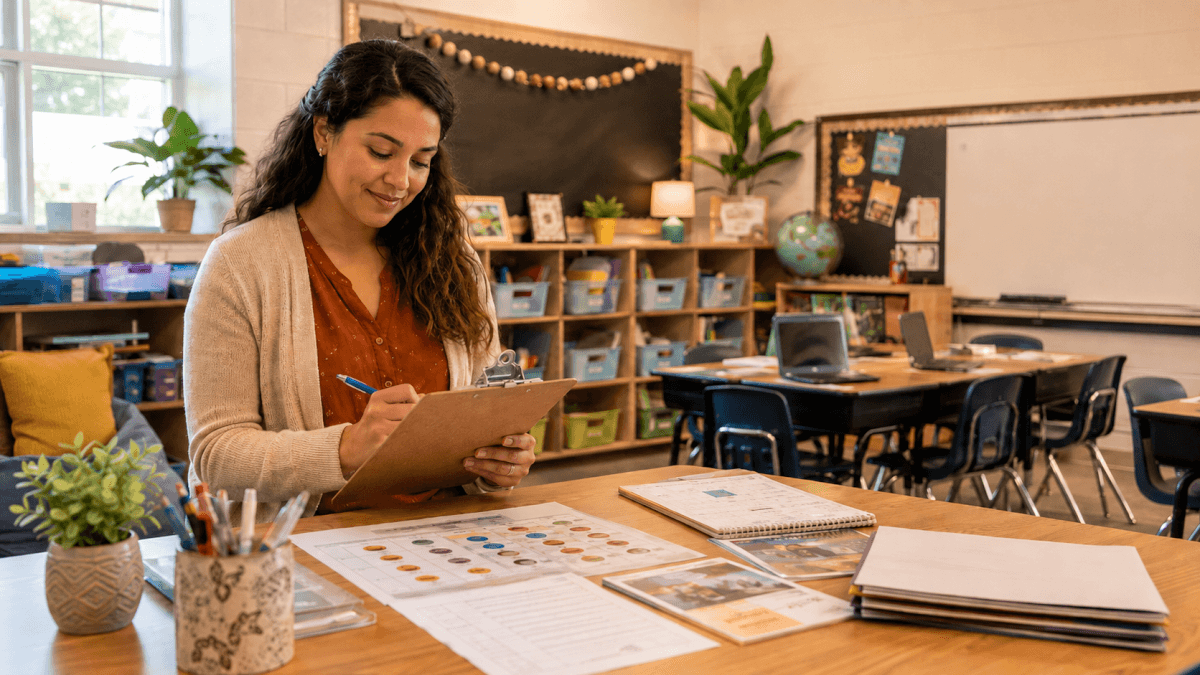
Those two weeks before school starts can make even veteran teachers feel like we’re holding 47 tabs open in our brains. We’re thinking about names, seating, supplies, routines, parent communication, standards, and that first unit we swear we’ll map out before the copier jams and the meetings begin. A solid back to school planning checklist helps us focus on the few things that actually reduce first-week chaos instead of spending precious time color-coding bins no one will notice by Friday.
This is the practical version many of us come back to every August: prep the systems students need first, then the lessons, then the nice-to-have details. If we get routines, a first-unit outline, roster and seating plans, and a clear family introduction in place, the opening days run much more smoothly.
Your Back to School Planning Checklist: Start with What Students Will Need on Day One
Before we decorate, laminate, or redesign our bulletin boards, it helps to ask one simple question: What must be ready for students to enter the room and function successfully on the first day? That question keeps us grounded.
1. Finalize your non-negotiable routines
Students do better when the classroom runs predictably, and we do too. We do not need 25 polished procedures before the first bell, but we do need the core five to seven that hold the day together.
Start by writing out exactly how you want students to:
- Enter the room
- Find their seat or assigned area
- Get materials
- Turn in work
- Ask for help
- Transition between activities
- Pack up and exit
For elementary classrooms, this may include morning tubs, where backpacks go, lunch count procedures, and carpet transitions. For middle and high school, it may be bell work, tech expectations, late work bins, and bathroom sign-out.
Here’s the part experienced teachers know: if a routine matters to us, we should script the first explanation and plan how we’ll model it. Not forever. Just for the first week.
For example:
- Grade 2: “When you enter, hang your backpack, place your folder in the blue bin, and begin the picture directions on the board.”
- Grade 7 ELA: “When the bell rings, you should already be seated with your notebook open to the warm-up projected on the screen.”
- High school science: “Pick up the lab handout from the side table before sitting down, then start the Do Now while attendance is taken.”
Keep these routines visible on a simple checklist for yourself. If we leave them in our heads, we tend to explain them inconsistently.
2. Decide what students will do in the first 10 minutes
The opening minutes shape the tone of the whole class. Plan them now. This reduces stress immediately because we are not improvising while students look around, test boundaries, and ask where to sit.
Choose one simple first-day opening structure:
- Greeting at the door
- Posted or projected directions
- Name tents or a brief student survey
- A low-stakes task students can begin independently
Examples:
- K-1: color-and-draw page with picture directions
- Grades 3-5: “About Me” card plus supply sorting directions
- Middle school: interest inventory and assigned-seat task card
- High school: syllabus snapshot, intro prompt, or short reflection on goals
If your school requires specific first-day documents, tuck them into this plan now so you are not shuffling papers while trying to learn names.
Map the First Unit Before the Meetings Pile Up
One of the smartest items on any back to school planning checklist is outlining the first unit from the standard before students arrive. This is what saves us from the late-September scramble, when we realize we’ve taught three engaging activities but haven’t built toward the actual learning target.
3. Start with the standard, not the worksheet pile
Take your first priority standard or set of standards and unpack what students need to know and do.
For example:
- Grade 4 math: place value understanding and multi-digit operations
- Grade 6 ELA: citing textual evidence and determining central idea
- High school biology: cell structure and function aligned to your state standards or NGSS-aligned goals
- Grade 3 social studies: community, citizenship, and local government expectations
Then sketch the unit in this order:
- The standard or learning goal
- What proficiency looks like
- The end-of-unit assessment or task
- The first 5-10 lessons students will need to get there
This does not need to be fancy. A one-page outline is enough.
If you want a quicker starting point, you can build from the standard using PlanSpark's Lesson Plan Generator so you are not creating every lesson sequence from scratch. That can be especially helpful when we know the content but need help organizing the progression.
4. Prep just enough for week one and week two
We do not need the whole semester printed and stacked. We do need enough clarity that the first ten school days feel purposeful.
A practical target is to have:
- Day 1-3 fully planned
- Week 2 outlined
- Core materials identified
- One formative check ready
That formative check might be:
- a phonics quick check in primary grades
- a multiplication fluency probe in upper elementary
- a short constructed response in ELA
- a lab safety entrance ticket in science
- a map-skills check in social studies
When our first unit is mapped from the standard up front, we make better day-to-day decisions. We can still adjust for student needs, but we’re adjusting from a plan instead of reacting in the moment.
Set Up Roster and Seating with Flexibility in Mind
Rosters change. Schedules shift. New students appear after we thought we were done. So the goal is not a perfect seating chart. The goal is a workable one we can revise quickly.
5. Build a first-draft seating chart
Use what information you have, but do not overthink it. In the first week, seating is a management tool, not a final statement on student identity.
Consider:
- Known accommodations and access needs
- Line of sight for board visibility
- Hearing and attention needs
- Student support pairings to avoid or encourage
- Traffic flow around the room
Elementary teachers may want table groups with one or two extra flexible spots. Secondary teachers may want alphabetical seating for the first few days simply to speed attendance and name learning.
A helpful trick: leave a couple of seats open in different parts of the room. That makes roster changes much easier and saves us from reprinting everything when one student is added to third period.
6. Prepare your roster tools
Before students arrive, make sure you have:
- a printed roster and digital roster if available
- phonetic notes or space to add pronunciation
- a place to note preferred names if your school policy allows
- medical, allergy, or accommodation alerts where appropriate and confidentially handled
- a quick checklist for forms, devices, and supplies
This is also the moment to create a simple method for learning names. Many of us use seating charts with photos if available, index cards, or student info sheets collected on day one.
Prepare the Parent or Caregiver Introduction Early
A calm, clear family introduction is one of the highest-leverage tasks on a back to school planning checklist. It reduces confusion, answers repeat questions, and establishes that your classroom is organized and welcoming.
7. Write one warm, useful intro message
Keep it short enough that busy families will actually read it. Include:
- who you are
- what subject or grade you teach
- how families can contact you
- how often you typically respond
- what students should bring or expect the first week
- one positive note about the year ahead
A simple version might sound like this:
“Hello families, I’m Ms. Rivera, and I’m excited to teach 5th grade this year. Our class will focus on building strong routines, a kind learning community, and confident reading, writing, and math habits from the start. The best way to reach me is by email, and I typically respond within 24 hours on school days. During the first week, students should bring a labeled water bottle, headphones if available, and any school-issued supplies. I look forward to working together this year.”
That’s enough. We do not need a newsletter-length life story in August.
8. Decide your communication system now
Choose where updates will live: email, learning platform, weekly folder, class app, or school newsletter system. Families appreciate consistency more than frequency.
Ask yourself:
- How will I send whole-class updates?
- How will I communicate individual concerns or celebrations?
- What is my boundary for after-hours responses?
If we decide this before school starts, we are much less likely to create a communication habit that is impossible to maintain by October.
The Often-Forgotten Prep That Saves First-Week Stress
9. Make copies and label the first round of materials
Copy only what you know you will use in the first few days. Label stacks by day or class period. Put student handouts in one place, teacher notes in another, and any forms to be collected in a clearly marked bin or folder.
Nothing spikes stress like hunting for the right stack while 28 students watch us.
10. Test the classroom logistics
Do a short walk-through as if you were a student.
- Can students see the board from every seat?
- Do devices or chargers have a clear place?
- Can students access pencils, tissues, and turn-in trays without a traffic jam?
- Are anchor charts or posted directions readable?
- Does your technology actually connect?
This is especially important in departmentalized settings and secondary classrooms where multiple groups rotate through all day.
11. Prep one backup plan for everything important
Veteran-teacher habit: always assume one thing will go sideways. Have a backup for seating, technology, and early-finisher time.
Examples:
- Printed attendance list if the student information system is slow
- Paper version of a survey if devices are not ready
- A sponge activity if announcements run long
- One independent task for students who finish quickly
This is not pessimism. It’s practical planning.
A Simple Two-Week Sequence to Follow
Week 2 before school starts
- Unpack your first standards and outline the first unit
- Plan days 1-3 and sketch week 2
- List and script core routines
- Draft your first seating chart
- Write your family introduction
Week 1 before school starts
- Set up materials and traffic flow in the room
- Post or print first-day directions
- Make copies for the first week
- Prepare roster tools and name-learning supports
- Test technology and backup plans
- Send or schedule your parent intro if allowed
Keep the Checklist Useful, Not Perfect
The best back to school planning checklist is not the longest one. It’s the one that helps us walk into day one knowing students can enter, sit, begin, learn, and leave with clear structure. If we handle routines, map the first unit from the standard, set up a workable roster and seating plan, and communicate clearly with families, we’ve already done the prep that matters most.
So if your list is still long, take a breath and return to sequence. Prep what reduces confusion first. The decorative extras can wait. The first day does not need to be fancy. It needs to be clear, calm, and teachable.
If you want a faster way to organize those first lessons, try PlanSpark's Lesson Plan Generator and get your opening unit moving before the school-year rush takes over. We do not need to do everything at once. We just need to do the next useful thing.