
The first week of school is full of little decisions that carry big weight. We’re labeling notebooks, learning names, teaching routines, and trying to remember which student is allergic to markers, glitter, or both. In the middle of all that, writing a thoughtful welcome email to parents from teacher can feel like one more task on an already crowded list. But it’s one of those small moves that pays us back all year long.
A good family email does not need to be long, polished, or fancy. It just needs to sound like a real person, offer useful information, and make it easy for families to know what to expect. When we get that first message right, we build trust early. We show families that their child is known, that communication matters, and that we’re ready to work together.
In this post, I’ll share a simple structure you can reuse every year, what to include, what tone works best, and a short example you can adapt for elementary, middle, or high school homeroom and advisory.
Why a welcome email to parents from teacher matters so much
That first family message sets the tone before conferences, missing assignments, behavior concerns, or grading questions ever come up. For many families, your email is their first impression of the year. A warm, useful note can communicate several important things at once:
- You are organized and approachable.
- You care about students as people, not just as names on a roster.
- You have clear routines and communication expectations.
- Families are welcome partners in supporting student success.
For homeroom and advisory teachers especially, this message matters because we often serve as the “home base” adult for both students and families. Even if students switch classes all day, families want to know: Who should I contact first? What kind of year will this be? How can I help my child get off to a strong start?
What to include in your first-week parent email
The most effective welcome email to parents from teacher messages are simple and structured. Think clear, friendly, and helpful. Here are the pieces worth including.
1. A warm greeting and quick introduction
Start by introducing yourself in plain, human language. Families do not need your full professional biography. They do need a sense of who you are and what role you play in their child’s school day.
You might include:
- Your name and role
- The grade level, homeroom, or advisory group
- One line about what you enjoy about teaching this age group
Example: “My name is Ms. Rivera, and I’m thrilled to be your child’s 6th grade homeroom and advisory teacher this year. I love helping middle schoolers build confidence, strong routines, and a sense of belonging.”
2. A positive tone about the year ahead
Families want reassurance. Without overpromising, let them know you’re excited to get started and that your classroom values growth, communication, and support.
This is a good place to mention a few themes, such as:
- Building community
- Learning routines
- Supporting responsibility
- Creating a safe, respectful classroom
3. The practical information families actually need
This is where your email becomes useful, not just nice. Include the basics families are most likely wondering about in the first week.
- School start and end times, if relevant
- Homeroom or advisory schedule
- Supplies students should bring
- How homework or planners will be used
- How important updates will be shared
- Any first-week reminders, forms, or deadlines
For elementary teachers, that may mean folders, snack routines, and dismissal communication. For middle or high school advisory teachers, it may mean checking the student portal, organizing materials, and daily expectations for announcements or check-ins.
4. How you will communicate with families
This section is especially important because it prevents confusion later. Let families know:
- The best way to reach you
- When you typically respond
- What kinds of updates they can expect from you
For example, you might say that email is the fastest way to reach you, that you respond within one school day, and that you send a weekly classroom update every Friday.
Clear communication boundaries are not cold. They are helpful. They let families know what to expect and help us protect our time.
5. One or two ways families can help at home
Keep this realistic. Families do not need a long list. A couple of specific, doable suggestions work best.
You might ask families to:
- Check backpacks or folders each evening
- Ask their child about one highlight and one challenge from the day
- Help establish a consistent bedtime and morning routine
- Encourage students to charge devices nightly, if applicable
- Review planner entries or school messages once a week
When we make the ask manageable, families are more likely to follow through.
6. An invitation to share information about their child
This is one of my favorite parts of a first-week email. It tells families, “You know your child well, and I want to learn from you.”
You can invite families to reply and share:
- Their child’s strengths or interests
- Anything that helps their child feel successful at school
- Any concerns they want you to know early
This is often where we learn the details that never show up on a roster: who is nervous about transitions, who loves science but hates reading aloud, who is caring for younger siblings after school, who is starting at a new campus for the first time.
A reusable structure for your welcome email to parents from teacher
If you’re staring at a blank screen, here’s a simple structure you can use every year and adjust in 10 to 15 minutes.
- Greeting: Welcome families and introduce yourself.
- Positive opening: Share excitement for the year and your classroom focus.
- Key logistics: Include the most important first-week information.
- Communication plan: Explain how and when families can expect updates.
- Family support tips: Offer one to two concrete ways families can help.
- Invitation to reply: Ask families to share anything important about their child.
- Warm closing: End with appreciation and encouragement.
If writing family communication feels like one more thing on your plate, it’s worth using tools that save time without making your message sound robotic. PlanSpark's Email Writer can help draft a first-week parent email and adjust the tone so it sounds warm, clear, and human. Sometimes getting a strong first draft is all we need to stop overthinking and hit send.
The tone that works best: warm, clear, and calm
Let’s talk tone, because this matters just as much as the content. The best family emails sound like a capable teacher speaking to real people. Not overly formal. Not too casual. Not stuffed with school jargon.
Here are a few tone tips that help:
Do
- Write like you speak in a professional conversation.
- Use short paragraphs and simple sentences.
- Be specific instead of vague.
- Sound welcoming without trying too hard.
- Assume positive partnership.
Avoid
- Overly stiff language like “Please be advised”
- Long lists of rules in the first message
- Too many exclamation points
- Educational acronyms families may not know
- A tone that feels defensive or preemptive
We can be clear about expectations and still sound kind. For example, “I usually respond to emails within one school day” sounds much better than “Do not expect an immediate reply.” Same boundary, better relationship.
An adaptable example you can use
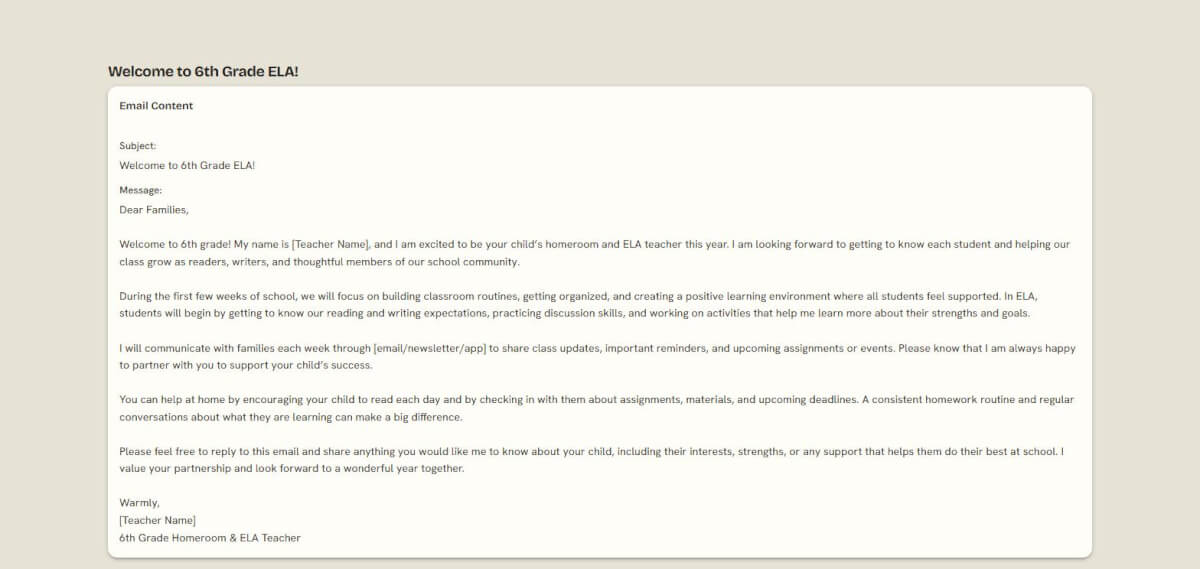
Here’s a short sample you can customize for your classroom:
Subject: Welcome to a New School Year
Dear Families,
My name is Mr. Chen, and I’m excited to be your child’s 7th grade advisory teacher this year. Advisory is an important part of our school day, and I’m looking forward to helping students start the year feeling organized, connected, and supported.
During the first few weeks of school, we’ll focus on routines, goal-setting, and building a strong classroom community. My goal is to help students feel known, prepared, and ready to learn each day.
A few helpful reminders for the start of the year:
- Please make sure your child brings their planner and charged device each day.
- Students should check school announcements and their assignment portal daily.
- I’ll send a brief family update each Friday with important reminders and upcoming dates.
Email is the best way to reach me, and I typically respond within one school day. If there is anything you would like me to know about your child as we begin the year, please feel free to reply to this message. I always appreciate hearing about students’ strengths, interests, and anything that helps them feel successful at school.
Thank you for your support. I’m looking forward to a great year together.
Warmly,
Mr. Chen
Final tips before you hit send
- Keep it skimmable. Families are reading on phones.
- Proofread the basics. Check names, dates, and contact information.
- Translate if needed. Use your school’s family communication supports when available.
- Save it as a template. Next year’s version will be even faster.
- Send it early. Ideally during the first week, before questions pile up.
A thoughtful welcome email to parents from teacher does not need to be perfect to be effective. It just needs to be warm, useful, and clear enough to open the door to a good partnership. If you’ve been putting off that first message, this is your sign to keep it simple and send it. Families don’t need corporate polish from us. They need a real teacher who communicates with care.
And if you want a little help getting started, PlanSpark's Email Writer can help you draft, revise, and fine-tune your welcome email to parents from teacher so it sounds like you on a busy week. You’ve already done the hard part by showing up for students. Let your first email reflect that steady, welcoming presence.