
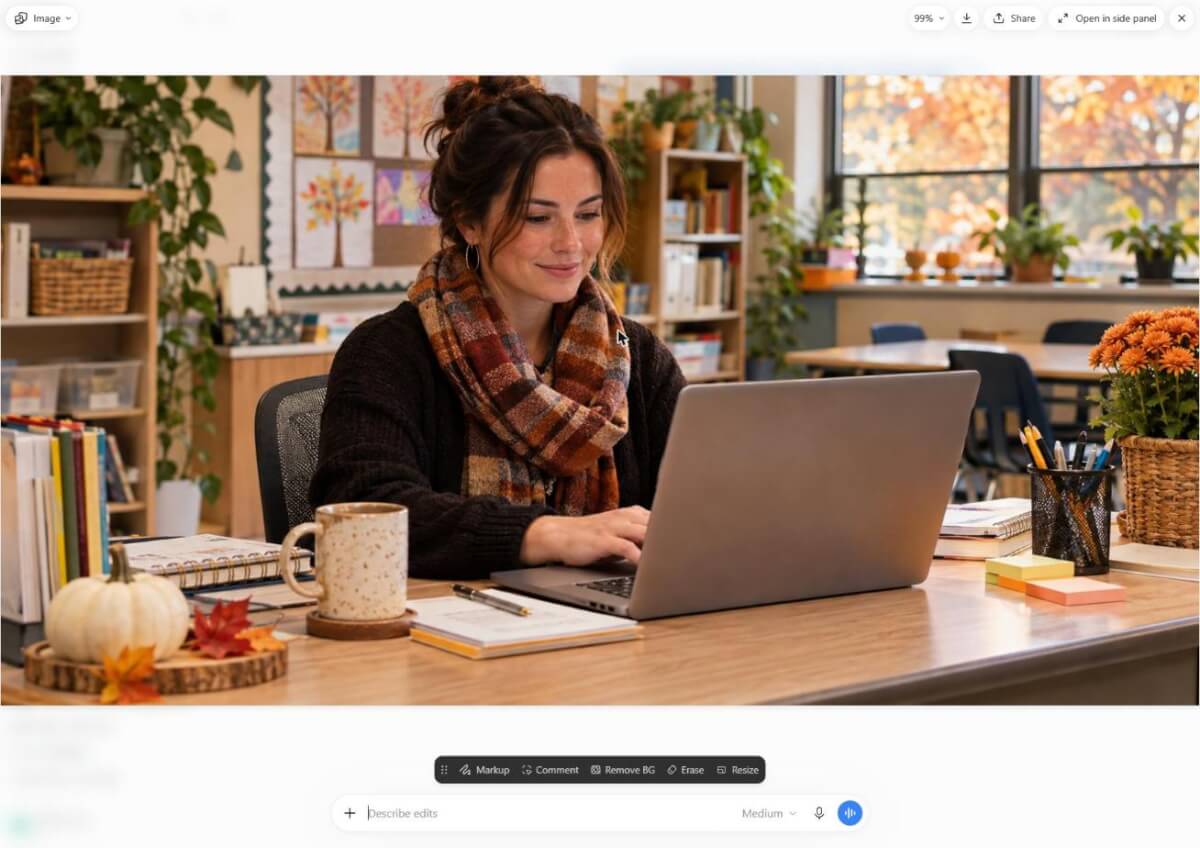
We have all sent the kind of class update that took 40 minutes to write and probably 14 seconds for families to skim. Between grading, planning, behavior notes, and trying to remember who needs boots for Friday, it makes sense that the classroom newsletter can turn into one more task hanging over us. The good news is that a strong classroom newsletter template does not need to be long, fancy, or packed with every detail from the month. In fact, the newsletters families actually read are usually the shortest ones.
If our goal is clear family communication, we do not need a mini-magazine. We need a predictable, readable note that tells families what we are learning, what is coming up, and one simple way to stay connected at home. That is it. When we keep the format tight and consistent, a monthly newsletter can truly take ten minutes.
Why a short classroom newsletter works better
In K-8 classrooms, families are busy. Many are reading emails on a phone between shifts, in the carpool line, or while helping another child with homework. A newsletter that stretches into multiple sections, a giant calendar, and six reminders is easy to ignore. A short note feels manageable.
Here is what we have learned over the years: families are more likely to read a message when it is:
- Predictable — same format each month
- Brief — under 250 words is a great goal
- Specific — a few meaningful details instead of every detail
- Useful — includes one action families can actually take
- Warm — sounds like a real teacher, not a school memo
That is why a reusable classroom newsletter template can save us time and help families stay informed at the same time.
What to include in a monthly classroom newsletter
For most elementary and middle grades, a monthly newsletter only needs four core parts. If you include these consistently, families will know where to look and what matters most.
1. One short paragraph about what the class is learning
This is the heart of the newsletter. Keep it to 2-4 sentences. Give families a quick snapshot of what students are studying in plain language.
For example:
- K-2 literacy: “We are working on retelling stories, identifying story elements, and reading with smoother expression.”
- 3-5 math: “We are using place value strategies to multiply larger numbers and explain our thinking with models.”
- 6-8 science: “We are investigating ecosystems and using evidence from readings and labs to explain how organisms interact.”
If it fits naturally, mention the skill or standard behind the learning. Families do not need the standard code, but they do appreciate knowing what students are expected to do.
2. Two important dates
Just two. This is where many newsletters get overloaded. Pick the dates families truly need to know now, such as:
- A field trip
- A project due date
- A class celebration
- A conference day
- A school closure or early release that directly affects your class
When we include too many dates, the important ones start to disappear. If the school already sends a master calendar, we do not need to recreate it in our newsletter.
3. One thing families can do at home
This is the most useful section for many caregivers. Keep it simple, realistic, and connected to current learning. Think “small and doable,” not “add another assignment.”
Examples:
- K-1: “Ask your child to point out beginning sounds on signs or food boxes at home.”
- 2-4: “Have your child explain one multiplication strategy they used this week.”
- 5-8: “Ask your child to summarize what they are reading in two sentences and support it with one detail.”
One good prompt is enough. Families do not need a menu of homework-style tasks.
4. One small win from the room
This is the piece families remember. Share one positive moment, class accomplishment, or trend you have noticed.
For example:
- “Our class is doing a great job transitioning more quickly after recess.”
- “Students showed real persistence during multi-step word problems this week.”
- “I have seen stronger partner talk during reading, especially when students disagree respectfully.”
This section builds trust. It helps families picture the classroom as a community, not just a list of assignments and deadlines.
A reusable classroom newsletter template you can send every month
Here is the simple format I recommend for K-8 teachers. Save it, duplicate it, and plug in fresh details each month.
Monthly Newsletter Layout
Subject line: November in Room 12
Greeting: Hello families,
What we are learning: 2-4 sentences about current learning in reading, math, science, social studies, writing, or your main content area.
Important dates:
- November 14: Family reading night
- November 21: Fractions quiz
Try this at home: One sentence with a simple conversation prompt or practice idea.
A small win from our room: One sentence celebrating effort, growth, or class community.
Sign-off: Thank you for your support,
Ms. Rivera
That is your whole newsletter. No banners. No clip art. No giant table. No five-paragraph essay.
Ms. Spark's sample November newsletter
Here is the kind of newsletter I would actually send in November:
Hello families,
This month, our class is working on identifying main idea in nonfiction and supporting our thinking with key details. In math, we are using models and equations to compare fractions. Students are building stamina with independent reading and doing a nice job explaining their thinking out loud.
- November 16: Book fair visit
- November 20: Fraction checkpoint
At home, ask your child to tell you one new fact they learned from a nonfiction text and how they know it is important.
One small win from our room: I have been so proud of how thoughtfully students are talking with partners, especially when they use evidence from the text.
Thank you for your support,
Ms. Spark
Notice what is happening here. It is warm, specific, and useful. It gives families a window into the classroom without asking them to read a full page of updates.
How to keep it under 250 words
If you want families to read the whole thing, under 250 words is a smart target. Here is how to make that realistic.
Use sentence limits for each section
- Learning update: 3 sentences
- Dates: 2 bullet points
- At-home connection: 1 sentence
- Small win: 1 sentence
Those limits help us resist adding every detail from the month.
Write like you talk
Families do not need formal report language. Short, direct sentences are easier to read on a phone and faster for us to write.
Instead of: “Students will be engaging in standards-aligned opportunities to demonstrate proficiency in informational text analysis…”
Try: “We are practicing how to find the main idea in nonfiction and explain it with details from the text.”
Focus on now, not everything
Pick what students are learning right now or next. We do not need to summarize the entire month, every subject, and every event.
Use one message for one purpose
A newsletter is not the place for every reminder. If a message is urgent, detailed, or requires a response, send it separately.
If you want a fast draft based on your notes, PlanSpark's Email Writer can turn a few bullet points into a family-friendly newsletter. And if you keep student needs, class routines, and family communication patterns in PlanSpark's Class Profiles, it is much easier to make sure your details stay accurate from month to month.
What to skip in your newsletter
Sometimes what we leave out matters just as much as what we include. Here is what I would skip.
Long calendars
If your newsletter includes a full monthly calendar with every spirit day, assembly, library visit, and lunch menu note, it becomes harder to scan. Families often already get this information from the school.
Too many reminders
“Bring folders daily.” “Wear sneakers on PE days.” “Please label jackets.” “Send in tissues.” These reminders may matter, but when they pile up, the newsletter starts to feel like a catch-all. Group those into a separate quick reminder email when needed.
Dense blocks of text
A single huge paragraph can make even good information feel overwhelming. Break it into short paragraphs or bullets.
Too many academic details
Families appreciate knowing what we are teaching, but they do not need a full pacing guide. Stay with the big ideas and practical next steps.
Anything time-sensitive that could get buried
If permission slips are due tomorrow, do not tuck that into a monthly newsletter. Send a separate message with a clear subject line.
A 10-minute routine for writing it each month
Here is a simple system that keeps the newsletter from becoming a major project.
- Open your saved template.
- Write three sentences about current learning. Look at your plans from the last week and next week.
- Add two dates. Only the most important ones.
- Add one home connection. Choose a question families can ask.
- Add one small win. Think class culture, effort, or growth.
- Read it once for clarity. Cut anything extra.
- Send it.
That is it. Ten minutes is possible when the format stays the same.
Why this matters for family communication
A monthly newsletter will not solve every communication challenge. But a clear, readable note can go a long way toward helping families feel informed and connected. It tells them, “Here is what matters most right now, and here is one easy way to support your child.” That is a message families can use.
If your current newsletter feels too long, too complicated, or too easy to postpone, simplify it. Start with this classroom newsletter template, keep it short, and make it a routine you can actually sustain. A newsletter that gets sent consistently is far better than a perfect one that never leaves drafts. And if you want to save even more time, use your notes with PlanSpark's Email Writer and keep class details organized with PlanSpark's Class Profiles. We do not need to do more here. We just need to make family communication easier to read and easier to send.
Try this classroom newsletter template for your next monthly update, and give yourself permission to keep it simple. Our families will thank us for the clarity, and honestly, so will we.