
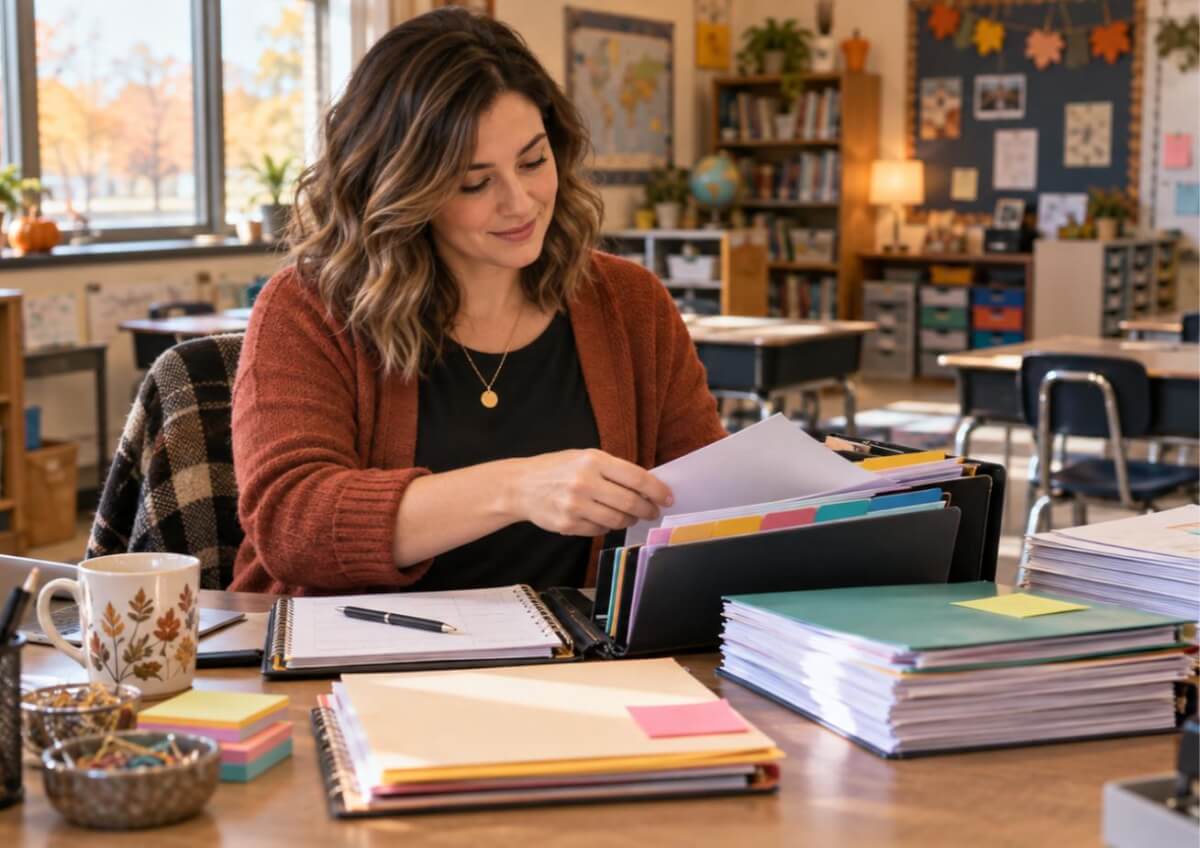
We all know how this goes: it’s 5:07 a.m., your throat feels like sandpaper, and you’re trying to type coherent directions through a fog of fever, guilt, and cold medicine. That is exactly why emergency sub plans belong on our September to-do list, not our sick-day panic list. If we build one solid folder now, we can stop scrambling later and know our students will have a calm, purposeful day even when we can’t be there.
The good news? This does not have to be fancy, color-coded, or packed with brand-new materials. In fact, the best emergency plans are simple, reusable, and easy for a complete stranger to run. Think one afternoon of setup for months of peace of mind. Let’s walk through what to put in the folder, how to make it work across the year, and where to store it so it’s actually useful when flu season arrives.
Why emergency sub plans matter so much in September
September is the sweet spot. We know our routines well enough to write them down clearly, but the year hasn’t gotten so busy that we’ve lost the window to prepare. Creating emergency sub plans early helps us avoid three common problems:
- Last-minute confusion: A sub can only follow what we leave behind. Clear plans prevent the day from unraveling.
- Filler work: Students do better with meaningful, standards-aligned tasks than random packets.
- Teacher guilt: When the folder is ready, we can stay home when we need to without trying to manage school from bed.
This is zero-guilt preparation. We are not creating a perfect substitute experience. We are building a dependable one.
What your emergency sub folder needs
A strong sub folder has four core parts: standing routines, ready-to-use activities, class information, and storage directions. If those pieces are in place, your folder can carry you through a single sick day, a family emergency, or even a few unexpected absences.
1. A one-page “start here” guide for the substitute
This page should be the first thing a guest teacher sees. Keep it brief, practical, and easy to skim. Include:
- Your name, grade level, and subject(s)
- Where students line up, go for specials, or transition next
- How attendance is taken
- Who to call for help nearby
- Any must-know student health or safety alerts that the office allows you to share appropriately
- Dismissal basics
Think of this page as the sub’s landing pad. If they can read it in two minutes and know how to begin, you’ve done your job.
2. Standing routines a stranger can actually run
This is the part many of us skip, but it’s the part that saves the day. Do not assume a substitute knows your signals, tech systems, partner procedures, or how your room “usually works.” Write down the routines as if someone has never met your students.
Helpful routines to include:
- Morning entry or bell work procedure
- How you get students’ attention
- Bathroom and water procedures
- How students turn in work
- What independent work time looks like
- Transition expectations
- End-of-day cleanup and dismissal
For elementary classrooms, you might write: “Students unpack, turn in folders to the blue bin, and begin the morning page on their desks.”
For middle or high school, it may be: “Students check the board, pick up the warm-up from the front table, and begin silently for the first five minutes.”
The clearer we are, the less time the sub spends guessing—and the less likely students are to test boundaries.
3. A class information page
This page should help a sub understand the room quickly without overwhelming them. Include:
- A current class roster for each period or homeroom
- A seating chart, if you use one
- Names of reliable student helpers
- Students who should not be seated together
- Students who receive accommodations the substitute should be aware of in practical terms
- Any schedule changes, lunch times, recess times, or specials rotation
Be professional and discreet. A sub does not need a full student history. They do need useful information such as: “Student may need directions repeated,” “Preferential seating near front,” or “Check in privately if frustration builds.”
If you need support organizing accommodation notes and student plans, it can help to keep those materials updated in one place using PlanSpark's Special Education tools, then translate only the essential substitute-facing information into your folder.
Build three evergreen activities per subject
If you want emergency sub plans that work in any week, this is the key: choose activities that are standards-aligned, low-prep, and not tied to a single chapter page or yesterday’s lesson. We want work students can do with limited teacher explanation and that still feels worthwhile.
Aim for three go-to activities per subject. That gives you enough flexibility for one day, block scheduling, or a multi-day absence.
Elementary reading ideas
- Read and respond: Students read a familiar-level passage and answer comprehension questions.
- Text evidence task: Students answer 2-4 questions using details from the text.
- Vocabulary in context: Students identify word meaning, synonyms, or use words in original sentences.
This is where evergreen materials shine. A set of reading pages from PlanSpark's Worksheet Generator can give you printable practice that doesn’t depend on that day’s exact lesson. If your students are used to citing evidence, quick reading tasks from PlanSpark's Text-Dependent Questions tool make strong sub plans because they’re structured, academic, and easy to explain.
Elementary math ideas
- Spiral review: Mixed problems covering skills already taught
- Math vocabulary match or sort: Terms, models, and examples
- Error analysis: Students explain what a sample student did wrong and fix it
For grades 2-5, spiral review is especially useful because it keeps skills fresh without introducing new instruction. If your grade-level team uses standards-based planning, choose review items tied to priority standards students have already practiced.
Secondary ELA ideas
- Short passage with text-dependent questions
- Paragraph analysis: Identify claim, evidence, and reasoning
- Grammar or revision task in context
For grades 6-12, avoid assigning a brand-new close reading protocol unless students already know it. A familiar article, excerpt, or paired paragraph set works better. Sub plans should feel academically normal, not like a special event.
Secondary math ideas
- Cumulative review set
- Problem-solving task using familiar steps
- Worked-example critique
For Algebra 1, Geometry, or Algebra 2, stick to previously taught standards. An emergency day is not the time to launch systems of equations or proofs if students need teacher modeling first.
Science and social studies ideas
- Reading + response: Content passage with comprehension and analysis questions
- Diagram, map, or data interpretation task
- Claim-evidence response using class content
These subjects are ideal for structured independent work. A short article on ecosystems, weather, government, or geography paired with clear questions can carry a full period while keeping students engaged in real content.
Keep the activities filler-free and standards-aligned
One of the best ways to decide whether something belongs in your emergency folder is to ask: “Would I feel fine assigning this on a regular Tuesday?” If the answer is yes, it’s probably a keeper.
Good emergency activities are:
- Already aligned to skills students have seen before
- Independent or partner-friendly
- Clear without a long teacher explanation
- Possible to complete on paper if tech is unavailable
- Useful for review, practice, or reinforcement
Less useful options include complicated projects, first-time labs, unfinished group work from yesterday, or anything that depends on your personality to make sense.
If you want a quick planning check, look at the standard first, then choose a task students can demonstrate independently. For example:
- Grade 3 ELA: Ask students to answer questions and refer to details from a text.
- Grade 5 math: Use multi-step review problems with models or explanations.
- Grade 7 science: Have students read a short text and interpret data.
- High school social studies: Analyze a source and write a short evidence-based response.
What to put in the physical or digital folder
Now let’s make this practical. Your folder should include everything needed for the sub to teach, without digging through your desk.
Inside the folder
- Start-here page
- Daily schedule
- Class rosters and seating charts
- Routine page
- Emergency procedures required by your school
- Three activities per subject or prep you teach
- Answer keys, if appropriate
- Simple behavior note form for the sub to leave feedback
If you teach multiple preps in middle or high school, make separate labeled sections by course title. If you teach self-contained elementary, separate by reading, math, writing, science, and social studies.
Where it lives
Your emergency folder should live in one obvious, consistent place. Good options include:
- A bright folder in your top desk drawer labeled “Emergency Sub Plans”
- A clearly marked bin near your teacher area
- A shared team drive folder with the same title
- A printed copy in the office, if your school prefers that system
My advice? Keep both a physical copy and a digital copy. Technology fails. Printers jam. Folders go missing. Redundancy is our friend.
How to keep emergency sub plans usable all year
The biggest mistake we make is building the folder once and never touching it again. Good emergency sub plans are not rebuilt monthly, but they do need quick maintenance.
Do a five-minute check each quarter
- Update class rosters
- Swap in current seating charts
- Replace any activity students have already completed
- Adjust schedule changes for new semesters or specials rotations
- Refresh helper student names if needed
That’s it. This is not a major project. A short calendar reminder at the end of each quarter keeps the folder ready.
Use materials that don’t expire quickly
The more evergreen the activity, the less upkeep it needs. Review practice, reading response, vocabulary tasks, math spiral work, and text-based analysis all hold up better than trendy seasonal sheets or lesson-specific handouts.
Your one-afternoon build plan
If this still feels like a lot, here’s the simplest way to finish it in one afternoon:
- Set a 20-minute timer and write the start-here page, routines, and schedule.
- Print rosters and seating charts.
- Choose three activities per subject from materials you already use or can quickly generate.
- Make copies and add answer keys.
- Put everything in one labeled folder and save a digital version.
- Tell a teammate or office staff where it is.
Done is better than perfect here. A basic folder that exists is far more useful than an elaborate one we never finish.
Build it now, thank yourself later
September is the right time to create emergency sub plans because our future selves deserve better than a 5 a.m. scramble. A strong folder gives a substitute clear routines, meaningful work, and the class information they need to keep the day steady. It also gives us permission to be sick, stay home, and handle life without trying to write lessons under pressure.
If your folder still needs those evergreen activities, start with a few reusable reading and review tasks. Printable practice from PlanSpark's Worksheet Generator and ready-to-use reading sets from PlanSpark's Text-Dependent Questions tool can help us fill the folder quickly with work that’s academic, clear, and usable all year.
Pick one afternoon this week, build the folder, and put it where someone can actually find it. Flu season does not wait for us—but we can be ready for it.