
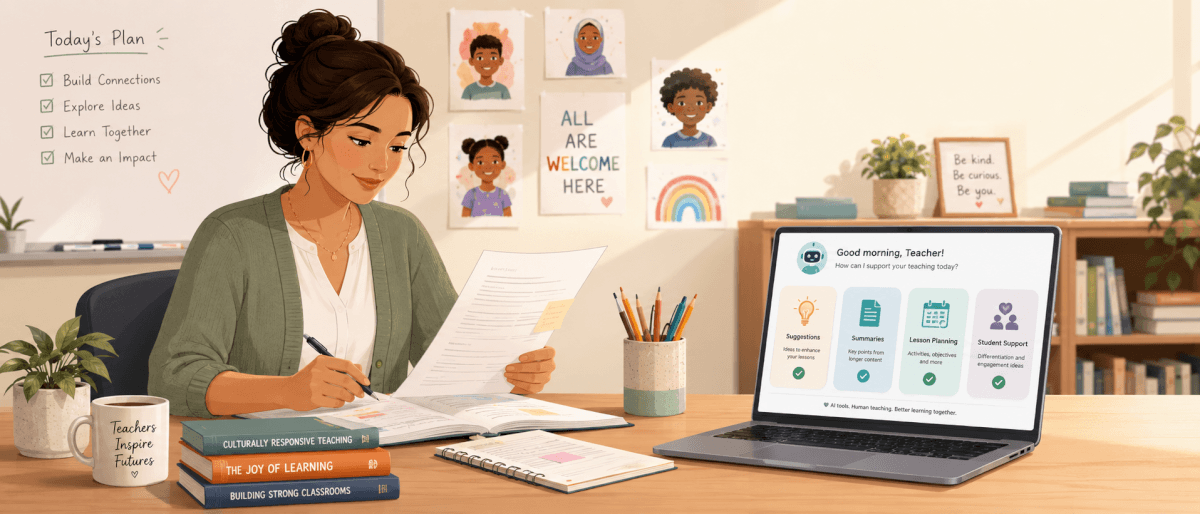
Finding Relief From the Blank-Page Stress
If you've ever stared at a blank screen late in the afternoon trying to write an IEP goal, a 504 accommodation plan, or a behavior intervention plan, you're not alone. Even after 30 years in the classroom, I still remember that feeling of knowing exactly what a student needs — but struggling to put it into precise, compliant language. That's where an AI-supported IEP goal generator or other special education teacher tools can give us a gentler starting point.
AI won't replace our professional judgment — and it absolutely shouldn't. But it can help us break through writer's block, strengthen clarity, and keep paperwork from overflowing into our evenings.
How AI Supports, Not Replaces, Our Professional Expertise
Before we dive in, a gentle reminder: AI drafts should always be reviewed, revised, and approved by qualified educators, aligned with the student's actual data, team decisions, district policies, and legal requirements. Think of AI as that colleague who helps you get the first version down — you still shape the final draft.
Tools like PlanSpark's Special Education Generator make it easier to produce initial language for IEP goals, 504 accommodations, and BIP supports, saving us hours while keeping us in the driver's seat.
Using an IEP Goal Generator to Draft Clear, SMART Goals
Whether you're new to special education or you've been writing goals for decades, creating goals that are truly SMART (Specific, Measurable, Achievable, Relevant, Time-bound) can take real time and energy. That's where an IEP goal generator becomes surprisingly helpful.
Why SMART IEP Goals Are So Tricky
We often know exactly what we want a student to achieve — for example, increasing reading fluency or improving self-advocacy. The challenge is translating that vision into legally sound, measurable language. AI can help us refine wording, adjust specificity, and build a draft that we can quickly modify to match real student data.
Practical Ways Teachers Can Use AI for IEP Goals
- Generate a first draft of a reading comprehension goal for a 4th grader using MAP or classroom assessment data.
- Rewrite a vague functional skills goal into measurable language.
- Produce multiple versions of a goal so your team can select the one that best fits the student.
- Adjust wording for different grade levels or curriculum standards.
Example Prompt You Might Use
"Draft three SMART goals for a 7th-grade student who needs support in written expression. Include measurable criteria and align them with typical middle school expectations. Leave placeholders for actual student data."
Then you tweak the draft directly — weaving in the student's present levels, progress monitoring methods, and service minutes.
Creating a 504 Accommodation Plan With Less Stress
General education teachers are often responsible for helping draft or review pieces of a 504 accommodation plan, and that can be intimidating. AI can't decide which accommodations are appropriate — only the team can — but it can help us phrase supports clearly and consistently across documents.
What AI Can Help With
- Drafting clear descriptions of commonly used classroom accommodations.
- Rewriting lengthy text into parent-friendly language.
- Offering examples of accommodations that match general need areas (team members still choose what belongs in the plan).
- Formatting the accommodation plan in a cleaner, more organized layout.
An Example of AI Saving Time
Say you're working with a student with ADHD. The team has agreed the student needs extended time, structured check-ins, and reduced distractions for assessments. Instead of writing everything from scratch, AI can produce draft language like:
"Student will receive extended time (up to 50 percent) for classroom assessments. The student will also participate in scheduled check-ins to support task initiation and will be offered a low-distraction testing environment when available."
You then adjust the details — making sure they reflect the actual decisions of the 504 team.
Using AI to Draft a Behavior Intervention Plan More Efficiently
Behavior documentation can be some of the most time-intensive work we do. A behavior intervention plan (BIP) must be individualized, data-driven, and team-developed. But once you know the function of the behavior and the team's chosen interventions, AI can help you move from notes to a clear, organized draft.
Where AI Can Lighten the Load
- Drafting descriptions of replacement behaviors.
- Creating sample positive reinforcement strategies based on the team's decisions.
- Putting together draft progress-monitoring language.
- Shifting between professional, parent-friendly, and student-friendly wording.
Example Prompt for a BIP Draft
"Draft a behavior intervention plan section for a 3rd-grade student who elopes during transitions. Include prevention strategies, a replacement behavior, and reinforcement ideas. Leave placeholders for specific data and teacher input."
Combining AI Tools to Support Your Workflow
When we're in the thick of paperwork season, a single tool is great — but a whole ecosystem working together is even better. AI can help beyond drafting goals and plans.
Provide Clear, Supportive Student Feedback
Once you have goals outlined, you might also need to generate progress updates or quick comments for students. PlanSpark's Student Feedback Generator lets you create professional, strengths-based responses you can customize for report cards, progress notes, or daily communication logs.
Write Emails to Families and Staff With Less Stress
Whether you're scheduling a meeting, clarifying accommodations, or sharing updates, PlanSpark's Email Generator helps you quickly draft messages that are warm, clear, and appropriate for school communication.
Tips for Using AI Responsibly in Special Education
As powerful as AI can be, we all share the responsibility to use it thoughtfully — especially in special education documentation.
Keep These Guardrails in Mind
- Never copy/paste without reviewing and editing for accuracy.
- Always align drafts with student data, team decisions, and district guidelines.
- Use AI as a starting point — not a final version.
- Protect student confidentiality by avoiding identifiable details when generating drafts.
Why These Tools Matter for Teachers
We entered this profession to help kids grow — not to drown in paperwork. The right special education teacher tools let us spend more time planning instruction, collaborating with families, and supporting our students. Tools like PlanSpark's Special Education Generator can help us get there by reducing blank-page stress and giving us a strong base to work from.
Give Yourself Permission to Make the Work More Manageable
If there's one thing I've learned in three decades of teaching, it's this: we deserve tools that help us reclaim our time and reduce burnout. An IEP goal generator, a well-organized 504 accommodation plan draft, or a clearer behavior intervention plan doesn’t replace our expertise — it amplifies it.
So let yourself lean on the tools that support your best work. And if you're curious to try it, explore PlanSpark's Special Education Generator and see how much lighter the paperwork load can feel.