
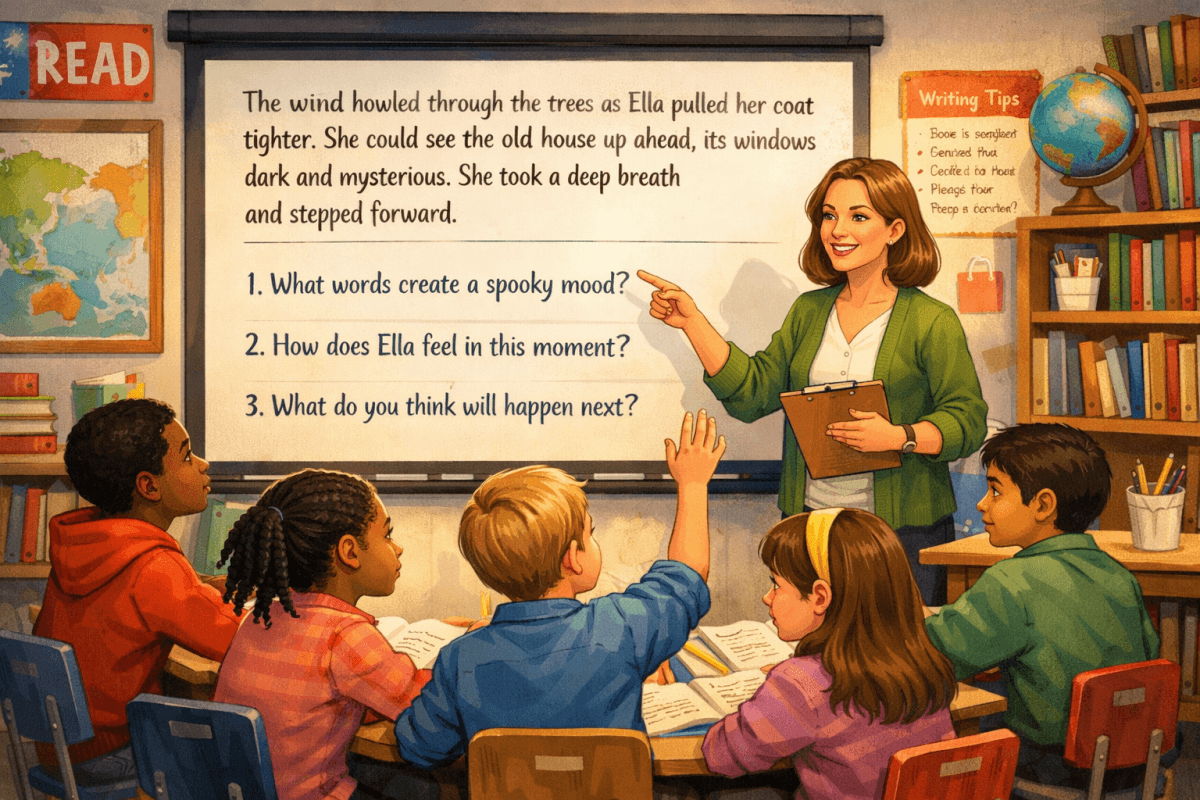
Why Text-Dependent Questions Are Critical for Close Reading
We’ve all been there: crafting questions for a reading assignment and wondering, “Am I really helping my students dig into the text, or am I just skimming the surface?” Writing strong text-dependent questions (TDQs) is one of the trickiest—and most important—parts of teaching literacy. These questions are central to the Common Core ELA standards and close reading strategies, but creating them can feel like solving a riddle every time.
That’s where tools like PlanSpark's Text-Dependent Questions Generator can be a game-changer. But before we dive into how AI can help, let’s break down what makes a question text-dependent versus text-inspired, and explore how to effectively scaffold TDQs for deeper comprehension.
What Makes a Question Text-Dependent?
Text-dependent questions require students to return to the text itself for evidence. These are not questions that students can answer from prior knowledge, personal opinion, or a quick Google search. Instead, TDQs challenge students to dig deep into the material, supporting skills like citing evidence, analyzing structure, and interpreting meaning. For example:
- Text-Dependent: “What evidence does the author provide to describe the main character’s motivations?”
- Text-Inspired: “Have you ever felt like the main character? Why?”
While text-inspired questions have their place, especially for building engagement, they don’t teach students the critical skills that TDQs target. And if our goal is to meet standards and prepare students for rigorous assessments, TDQs are a must-have in our toolbox.
The TDQ Progression: From Literal to Analytical
Not all text-dependent questions are created equal, and they shouldn’t be. A well-structured TDQ set scaffolds learning, starting with basic comprehension and building toward deeper analysis. Here’s how this progression might look across grade levels:
Elementary Example: Picture Book Passage
Let’s use The Gruffalo by Julia Donaldson as an example:
- Literal: “What is the first animal the mouse meets in the story?”
- Inferential: “Why does the mouse invent the Gruffalo? What clues in the text support your answer?”
- Analytical: “How does the author use rhyme and repetition to create suspense in the story?”
Middle School Example: Informational Text
For a middle school science text on climate change:
- Literal: “What are three effects of climate change mentioned in the text?”
- Inferential: “Why does the author include a section on renewable energy? How does it support their argument?”
- Analytical: “Compare the structure of this text to another informational article you’ve read. How does the structure influence the presentation of information?”
High School Example: Literary Excerpt
For a high school excerpt from Of Mice and Men by John Steinbeck:
- Literal: “What is George’s plan for the future, as described to Lennie?”
- Inferential: “What does the dialogue between George and Lennie reveal about their relationship?”
- Analytical: “How does Steinbeck’s use of setting reflect the themes of the novel?”
Notice how each level builds on the previous one, nudging students toward deeper thinking. This scaffolding is key to effective TDQs and ensures all learners, from struggling readers to advanced thinkers, are challenged appropriately.
How PlanSpark’s Text-Dependent Questions Generator Can Help
We know that writing TDQs takes time—and lots of it. That’s where PlanSpark's Text-Dependent Questions Generator comes in. This tool takes any text you upload and generates a scaffolded set of questions aligned to Common Core standards or your state’s specific benchmarks. Here’s how it works:
1. Start with the Standard
Effective planning begins with knowing your learning goals. Use PlanSpark’s Standards Unpacker to break down your target standard. For example, if you’re focusing on CCSS.ELA-LITERACY.RL.4.1 (citing textual evidence), you’ll know that your TDQs should guide students toward finding and using evidence directly from the text.
2. Choose the Text
Upload any passage—fiction, nonfiction, poetry, or even a multimedia text—to PlanSpark. Whether it’s a primary source document for social studies or a classic novel for high school English, the generator works with a variety of content types.
3. Generate Aligned Questions
With one click, the Text-Dependent Questions Generator produces a range of questions, organized by level (literal, inferential, analytical). For example, if you upload an excerpt from Charlotte’s Web, you might receive:
- Literal: “What does Wilbur think about being ‘some pig’?”
- Inferential: “Why does Charlotte decide to help Wilbur? Use evidence from the text.”
- Analytical: “How does the author use personification to make Charlotte a sympathetic character?”
You can refine the results, adding your own teacher flair or adjusting for your students’ needs. And because it’s all digital, you can easily integrate the questions into lesson plans or assessments.
How TDQs Support Standards-Based Planning
When used strategically, TDQs become the backbone of a standards-aligned workflow:
- Start with the standard. Use the Standards Unpacker to identify your teaching goals.
- Select an appropriate text. Choose something rich enough to support multiple layers of questioning.
- Generate your TDQs. Use PlanSpark’s TDQ Generator to create scaffolded question sets.
- Incorporate into lessons. Embed the questions into your lesson plans and discussions.
- Assess progress. Evaluate student understanding with customized assessments.
This workflow not only saves time but ensures that every piece of your instruction connects back to your goals—and to your students’ growth.
Let’s Make Questioning Easier—Together
We’re all striving to help our students become thoughtful, critical readers, and text-dependent questions are one of the most effective tools to get there. With tools like PlanSpark’s TDQ Generator, we can streamline the process, freeing up our mental energy for what really matters: connecting with our students and inspiring a love of learning.
Ready to give it a try? Start your free trial today and see how AI can transform the way you teach close reading skills.